
Three Sikh Principles for Everyday Living
Three Sikh Principles for Everyday Living
Sikh principles for daily life are not meant to stay only in books or inside the walls of a Gurdwara Sahib. In Sikhi, spiritual wisdom is meant to shape the way a person remembers Vaheguru, earns honestly, treats others, and shares what they have in the spirit of humility and seva.
For many people who are new to Sikhi, one of the biggest questions is this: How is Sikhi lived in everyday life? A simple and beautiful place to begin is with three well-known Sikh principles: Naam Japna, Kirat Karni, and Vand Chhakna. These are not just ideas to admire. They are foundations for living with purpose, discipline, and compassion.
A simple path with deep meaning
Sometimes people first encounter Sikhi through visible identity, major historical events, or a visit to a Gurdwara Sahib. All of these matter. But if someone wants to understand the heartbeat of Sikh living, these three principles offer a clear introduction.
They help explain how spiritual life and daily life belong together. In Sikhi, devotion is not separate from work. Prayer is not separate from conduct. Community is not separate from personal discipline. The path is about living truthfully in the world while staying connected to the Divine.
At Guru Nanak Gurdwara Belfast, these values are reflected not only in prayer and kirtan, but also in sangat, langar, and seva. They remind us that Sikhi is lived through both inward remembrance and outward action.
Naam Japna
Naam Japna means remembering and meditating on Vaheguru. This remembrance can happen through recitation, prayer, listening to Gurbani, reflecting on divine wisdom, and keeping the mind connected to the Creator throughout daily life.
For a beginner, this may sound abstract at first, but its meaning becomes clearer in practice. Naam Japna is about turning the mind away from constant distraction and ego, and toward divine awareness. It is a way of bringing calm, humility, and spiritual focus into life.
This does not mean a Sikh lives only in quiet isolation. Sikhi does not ask people to leave the world behind. Instead, it teaches them to remain spiritually awake while living within family, work, and society. A person may pray in the morning, remember Vaheguru during the day, listen to Gurbani, and try to keep their thoughts and actions aligned with truth.
In a busy city such as Belfast, this principle still matters deeply. Modern life is full of noise, speed, pressure, and constant demands for attention. Naam Japna reminds the Sikh that inner grounding matters. Without remembrance, life can become restless and self-centred. With remembrance, the heart becomes steadier and more aware of what truly matters.
Kirat Karni
Kirat Karni means earning an honest living through truthful and sincere effort. This is a practical and powerful principle because it brings spirituality directly into daily work.
Sikhi does not teach that faith belongs only in prayer. It teaches that how a person earns, behaves, and carries responsibility also reflects their spiritual life. Honest work is honourable. Deception, exploitation, and selfish gain do not fit the Sikh path.
For this reason, Kirat Karni is about more than employment. It is about integrity. It includes fairness, responsibility, and dignity in the way a person lives. Whether someone works in business, healthcare, education, transport, design, or at home caring for family, the same principle applies: live truthfully and do your duty with sincerity.
This matters for newcomers to Sikhi because it shows that Sikh teachings are deeply practical. The faith is not asking a person to separate worship from conduct. It is asking them to let truth shape both. A person who remembers Vaheguru but acts dishonestly has not understood the spirit of the teaching. Kirat Karni calls the Sikh to bring values into action.
Vand Chhakna
Vand Chhakna means sharing what one has with others. This includes food, resources, time, energy, and care. It is one of the clearest expressions of Sikh compassion and community life.
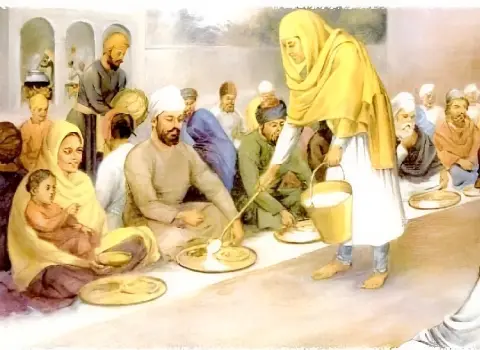
Many people first encounter this principle through langar, the free community meal served in a Gurdwara Sahib. In langar, all sit together and eat as equals. This reflects a deep truth in Sikhi: no one is too high, no one is too low, and no one should be left out.
But Vand Chhakna is not limited to the Langar Hall. It is a way of living. It asks a person not to hold tightly to everything for themselves. It encourages generosity, responsibility toward others, and awareness of human need. Sharing may take the form of helping a neighbour, volunteering in the community, supporting those in difficulty, or giving time in seva without seeking recognition.
This principle is especially meaningful in today’s world, where many people feel isolated or overlooked. Vand Chhakna teaches that faith should open the hand and soften the heart.
How the three principles work together
These three principles are often listed separately, but they are strongest when understood together.
Naam Japna gives spiritual grounding.
Kirat Karni shapes honest conduct.
Vand Chhakna turns personal blessings into shared good.
Without remembrance, action can become empty. Without honest living, devotion can become disconnected from reality. Without sharing, success can become self-centred. Together, these principles create balance.
They show that Sikhi is not only about what a person believes, but about how they live among others. The Sikh path is inward and outward at the same time: remember Vaheguru, live truthfully, and serve generously.
What this means for someone new to Sikhi
If you are just beginning to learn about Sikh teachings, these principles are a strong place to start because they are both simple and lifelong. A child can begin learning them, and an adult can continue deepening them for years.
They also help explain why the atmosphere of a Gurdwara Sahib feels the way it does. The prayer, the humility, the langar, and the spirit of welcome are not random customs. They grow from the values that shape Sikh life.
At Guru Nanak Gurdwara Belfast, these principles can help any visitor understand that Sikhi is not only something to observe. It is a path to live.
A way of life rooted in truth
The beauty of these Sikh principles for daily life is that they are clear, practical, and deeply human. Remember the Divine. Earn honestly. Share with others. In a complicated world, this is a way of living that brings clarity and purpose.
For anyone seeking to understand Sikhi, Naam Japna, Kirat Karni, and Vand Chhakna offer more than a summary. They offer a guide for everyday life shaped by humility, responsibility, and compassion. If you would like to learn more about Sikhi or connect with Guru Nanak Gurdwara Belfast, you are welcome to get in touch and continue that journey of understanding.